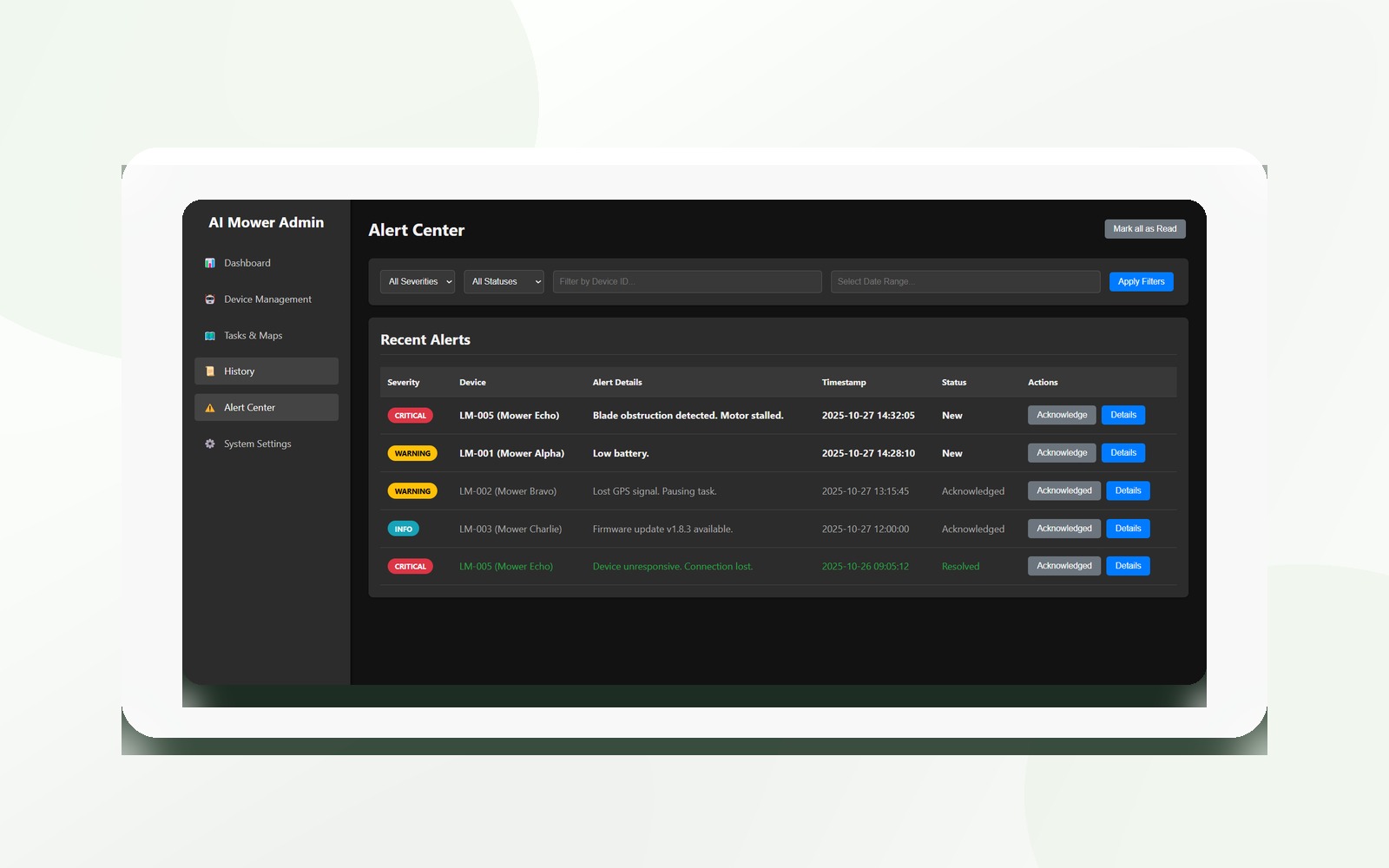
Finished product design is only one part of a robotic mower program. When a brand moves from prototype to shipment, the hidden systems become important: how each unit is tested, how RTK is calibrated, how sensor issues are diagnosed, how firmware is updated, and how service teams understand field problems.
Factory tests protect the brand experience
Outdoor robots combine mechanical parts, electronics, firmware, sensors, connectivity, batteries, motors, and software. A simple power-on test is not enough. End-of-line checks should confirm core hardware, drive behavior, communication, sensor response, camera status, charging, and safety functions. For robot mowers, cutting or work-tool behavior and docking-related checks may also be needed.
RTK calibration needs a repeatable workflow
RTK performance depends on base station setup, rover module integration, antenna position, correction data flow, and field conditions. A calibration tool should help production and service teams confirm that the positioning system is working as expected. It should also make it easier to identify whether a problem is caused by hardware, installation, signal environment, firmware, or app configuration.
Diagnostics should connect device, app, and service
A strong diagnostics plan gives different users the right level of detail. End users need clear guidance. Service teams need logs and error states. Engineering teams need deeper data for analysis. B2B partners should ask how the product records failures, how data can be exported, and how remote support is handled through the app or cloud platform.
OTA updates require discipline
OTA updates are valuable only when they are controlled. The team should define release testing, rollback strategy, version tracking, update prompts, low-battery handling, weak-network handling, and support instructions. For ODM programs, OTA planning should be agreed early because it affects firmware architecture, app design, and cloud operations.
What to include in a production-readiness review
- End-of-line test plan for controller, sensors, drive, power, camera, and communication.
- RTK base station and rover calibration flow.
- App and cloud diagnostic screens for service teams.
- Firmware version control and OTA release process.
- Field failure categories and escalation workflow.
Mowsion support path
Mowsion can support discussions around factory test tools, RTK calibration, diagnostics, cloud operation, fleet management, service workflows, and lifecycle tools for robotic lawn mower and outdoor robot OEM/ODM programs.